Star Time App Prototype
Theoretical design
Star Time • Spring 2026
Screen time as a reward, not a habit.
Screen time as a reward, not a habit.
Team members: Kinslei Crouch, Olyvia Cool, and Emma Thomas
Each team member contributed equally to design, prototyping, and research.
Each team member contributed equally to design, prototyping, and research.
Project Overview
Our app addresses the growing problem of excessive screen time by flipping the traditional model: Instead of restricting usage after the fact, users must earn their screen time upfront by completing tasks they set for themselves.
The Problem
The average person spends 6–7 hours per day on their screen, with 18–24 year-olds logging roughly 3 hours on social media alone (2024). Existing screen time tools are reactive, they cut off access only after overuse has already occurred. Over half of Americans (53%) say they want to reduce their phone usage, a number that has grown by 33% since 2023. The desire to change is clearly there; what's been missing is an engaging, proactive solution that meets users where they are. While the app is accessible to any smartphone user, our initial prototyping will focus on Gen Z and Millennials, the demographics most affected by excessive screen time.
The Solution
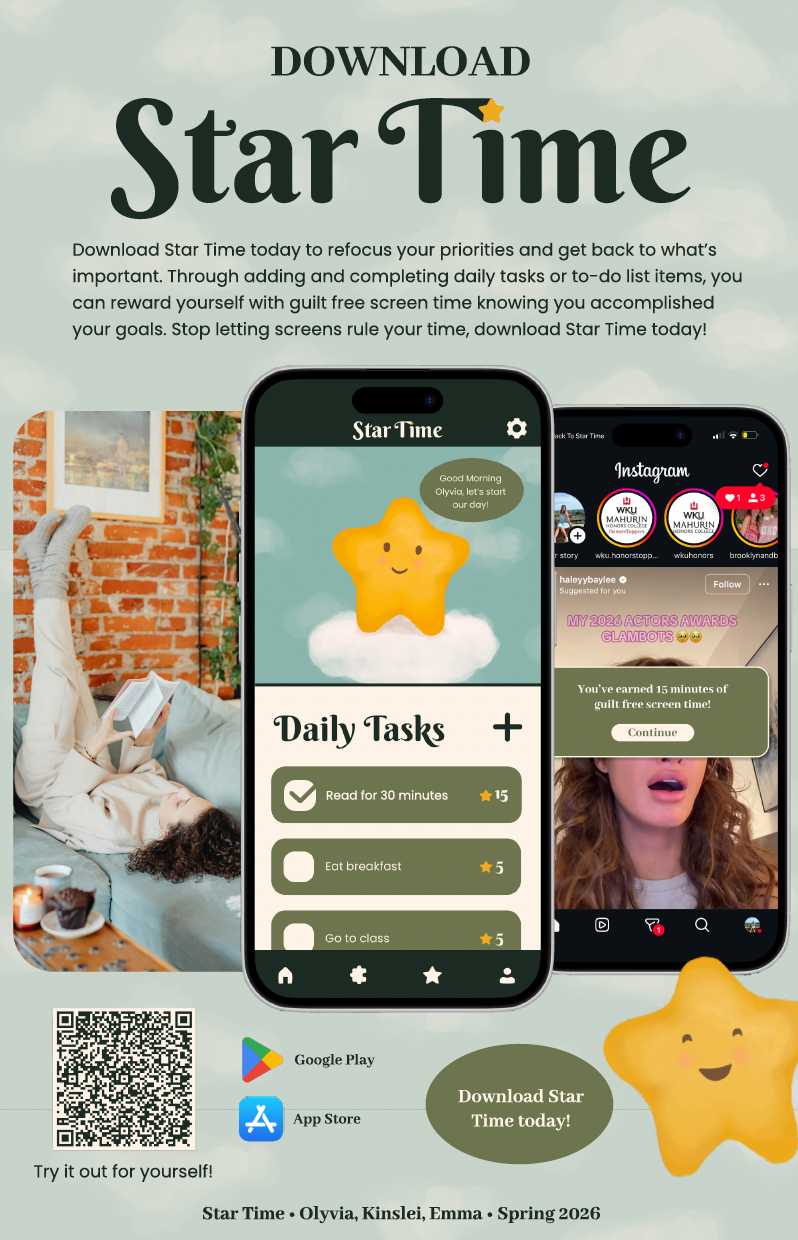
Star Time takes a proactive approach to screen time by flipping the traditional model: instead of cutting off access after overuse, users must earn their screen time before they use it. At the start of each day, users define their own personal tasks. These are things like making their bed, getting ready, or completing a morning routine. As tasks are checked off, blocked apps gradually unlock, creating a reward-based relationship with technology that puts the user in control.
To keep engagement high, the app also features daily puzzles that let users accumulate bonus screen time in a savings bank, which they can cash in whenever they're ready. This blend of task completion and optional challenges gives users flexibility while still encouraging productivity and focus.
To understand our audience's current relationship with screen time, we conducted a survey and user diary prior to prototyping.
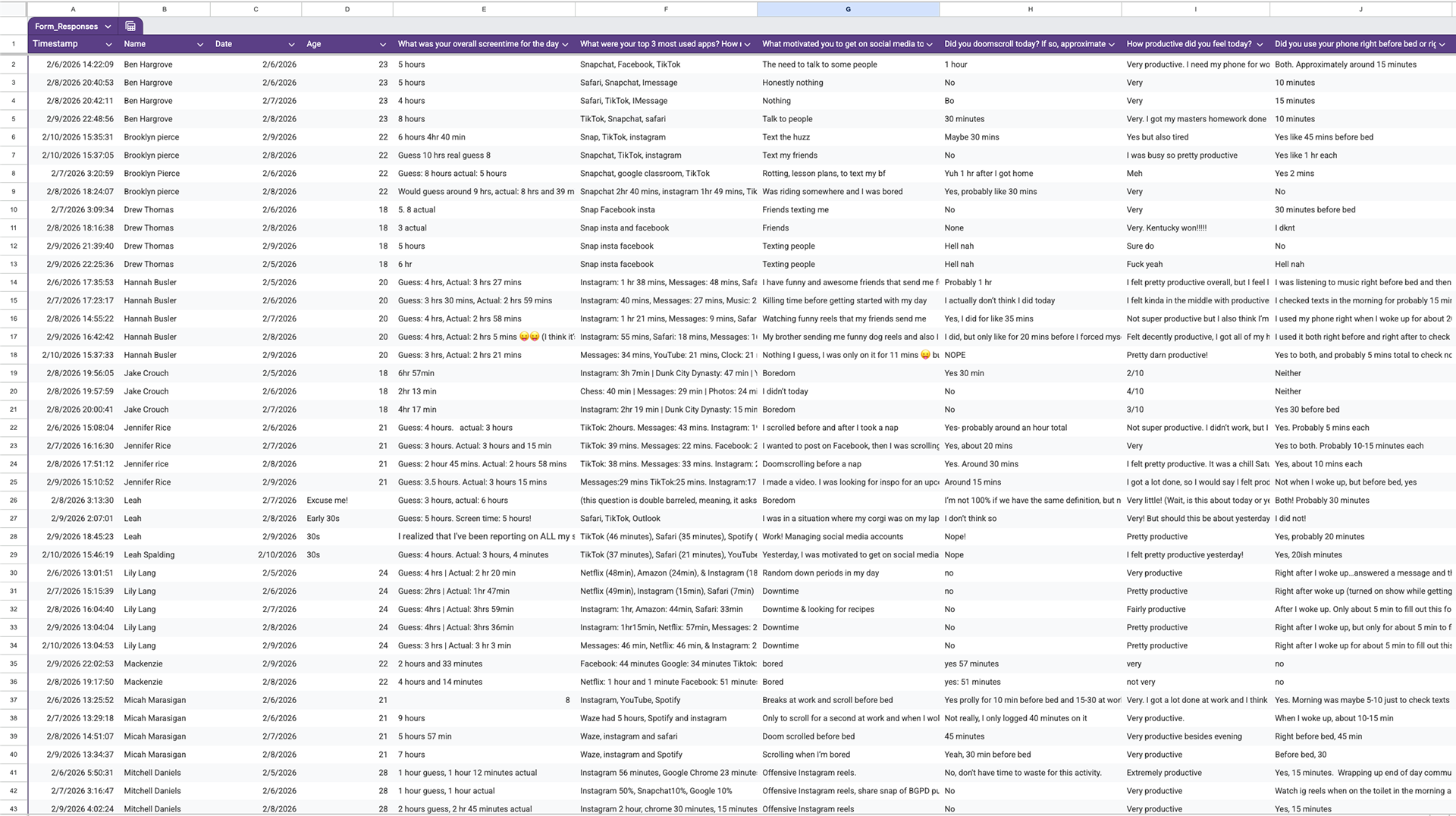
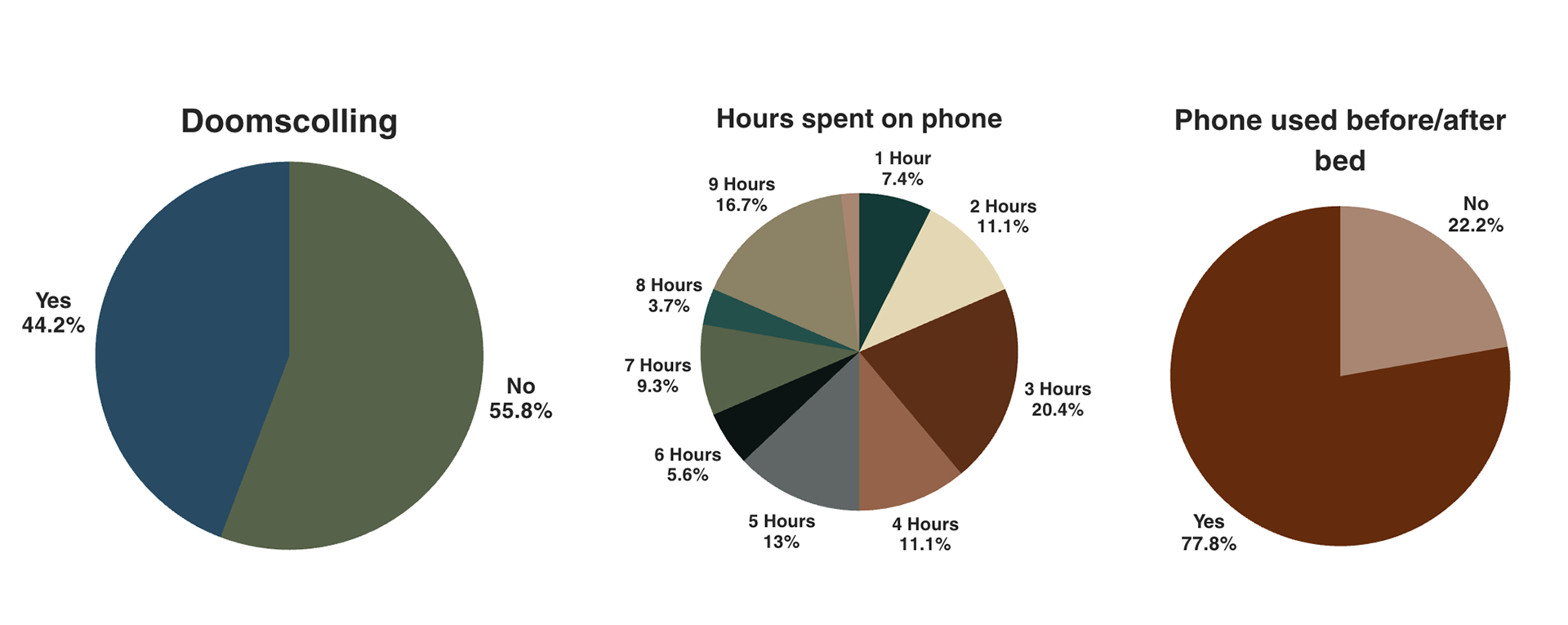
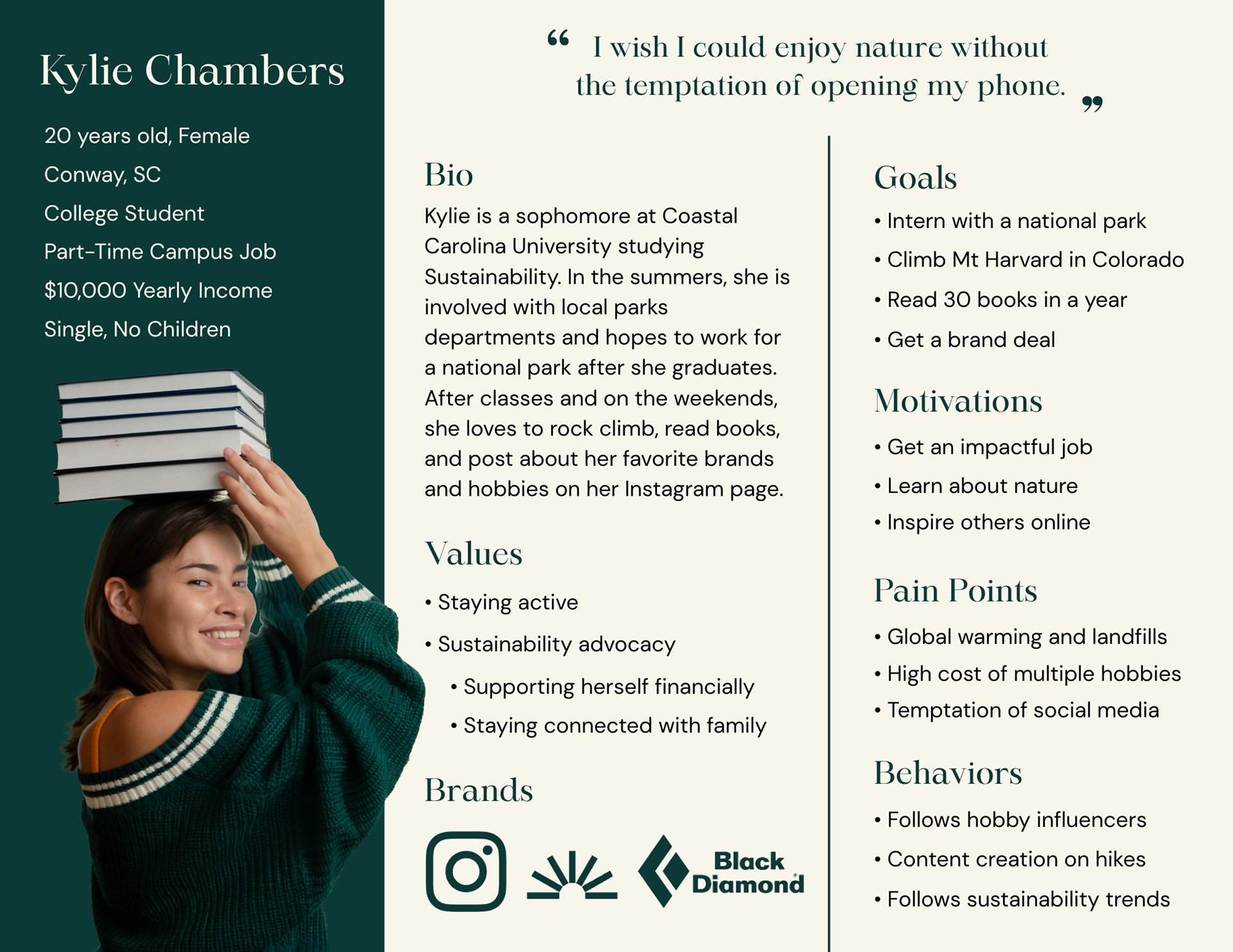
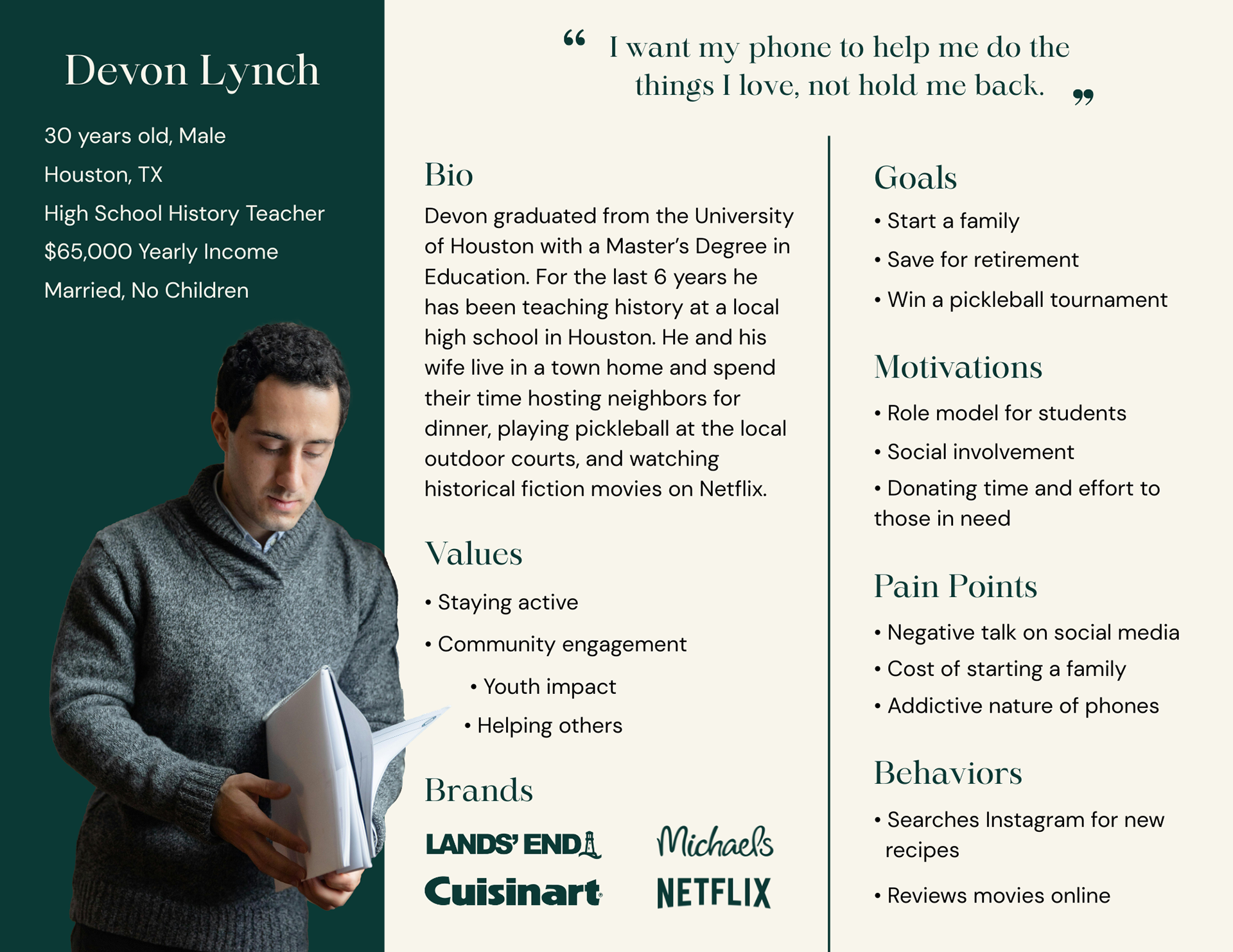
We screened 13 participants between the ages of 18-35, and received a total of 55 daily screen time diaries. Most people said they spent 3 hours on their phone a day. Social media (Instagram, Snapchat, TikTok, Facebook) was among the top used apps by participants. We also measured the amount of people that doomscroll on social media throughout the day with 44.2% of our participants saying yes, and 55.8% saying no. Along with this, we also measured if participants use their phone when they wake up or before they go to bed. 22.2% of participants said no, while 77.8% said yes. Based on these user diaries we created 2 user personas both in our initial target audience of 18-35.
Functionality was our top priority. We needed to create a space where everything a user needs to build a new habit lives in one place. At the same time, the app had to be visually engaging enough to hold the attention of users who are, by nature, easily distracted. These two goals shaped every decision we made.
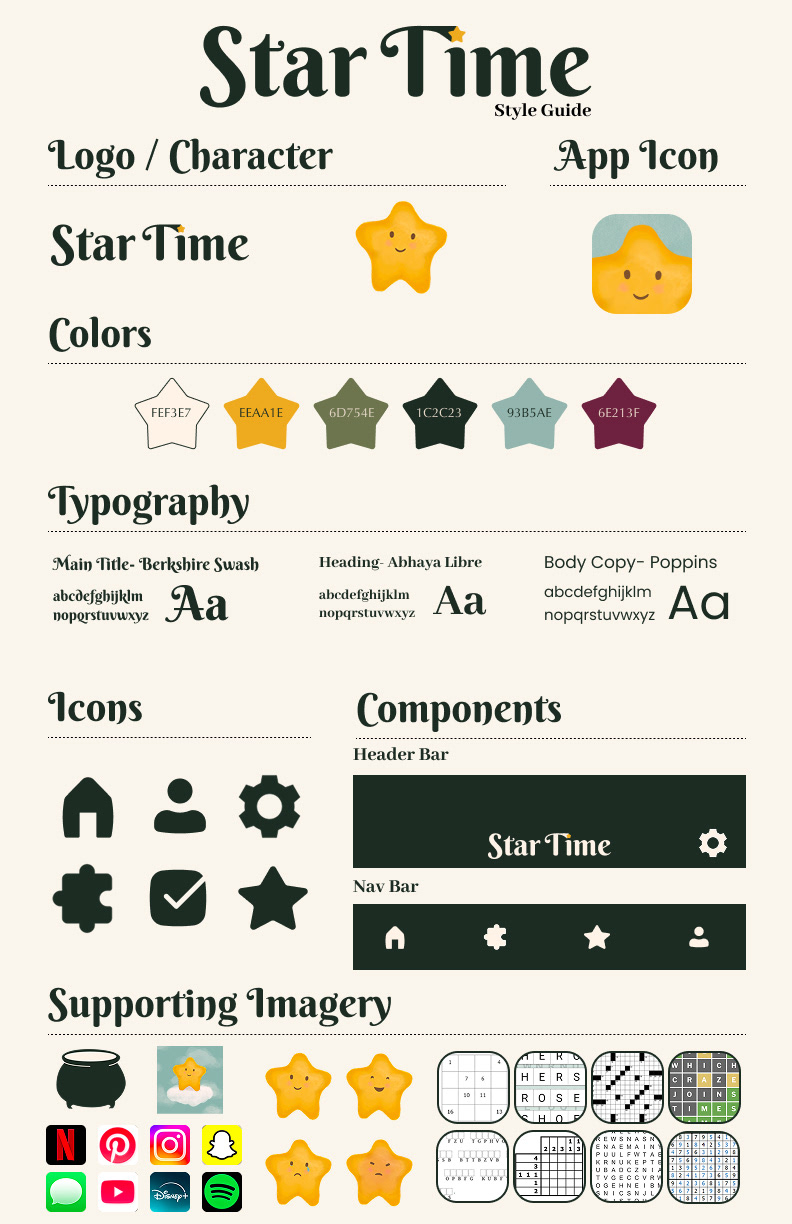
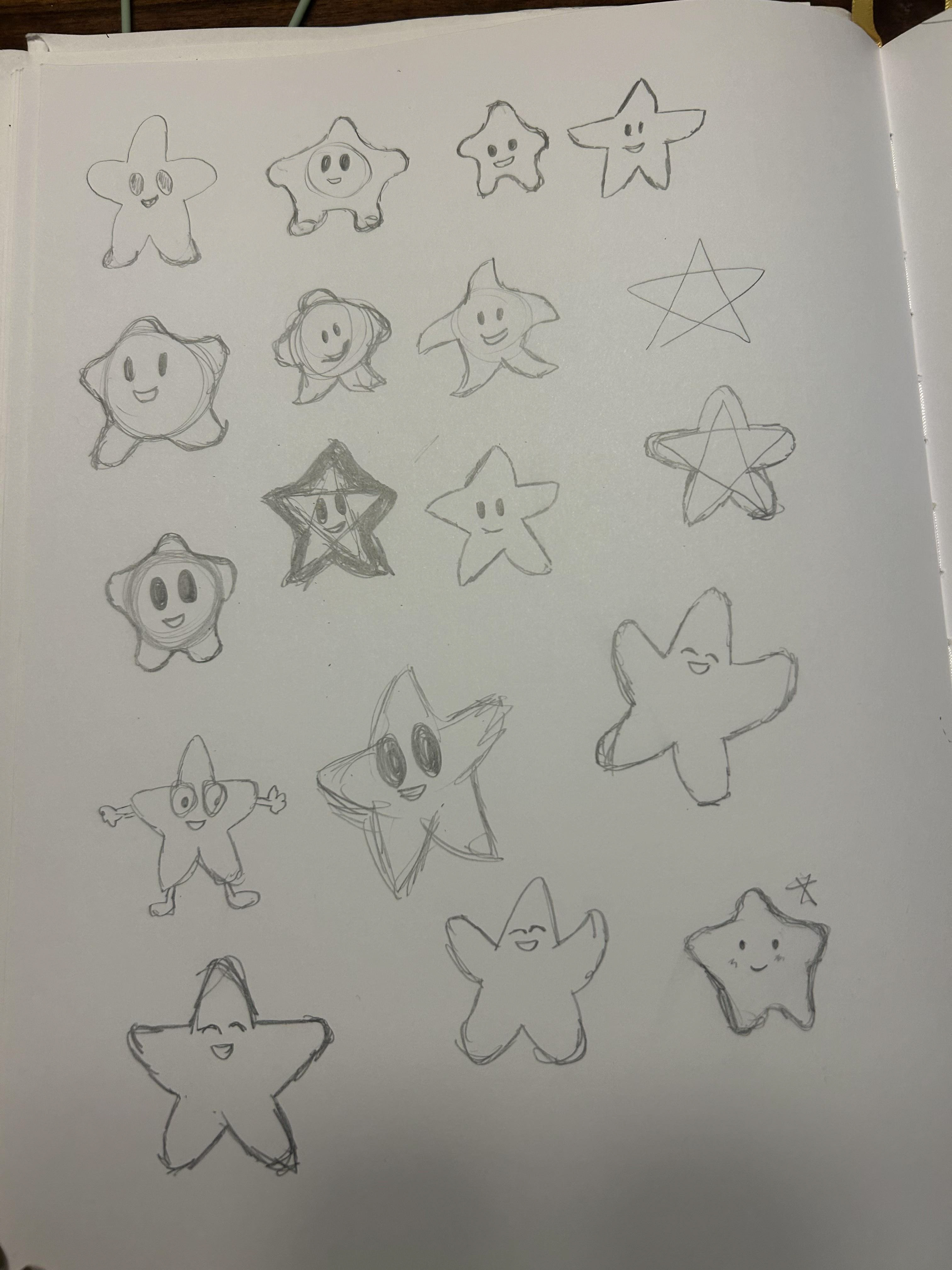
We began with a brand board to establish the visual identity of the app. During this stage, team member Olyvia developed sketches for a potential mascot. We wanted a character that reflected the light and encouraging spirit of the app. The result was Scout the Star.
From there, we mapped out the app's core capabilities, which became the foundation of our navigation structure. We conducted wireframing to establish page layouts and element organization before moving into high-fidelity prototyping.
For our prototype we wanted to include a few main elements: a home screen, a task screen, a puzzle screen, rewards screen, and a profile with metrics. This decision formed the basis of our prototype and informed our user task selection for user testing. While the home screen and the task screen got streamlined into one, the prototype mostly followed our original wireframes.
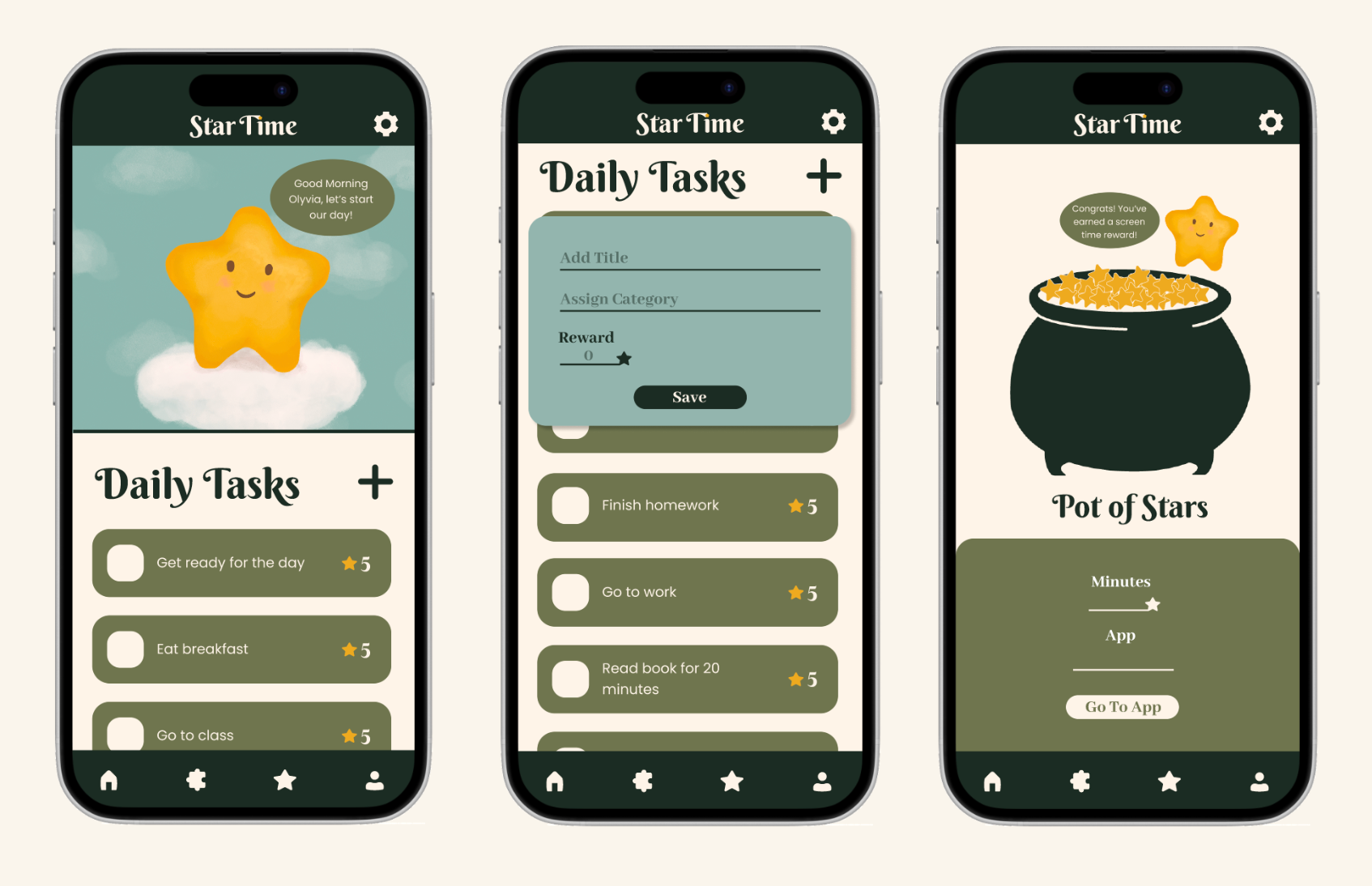
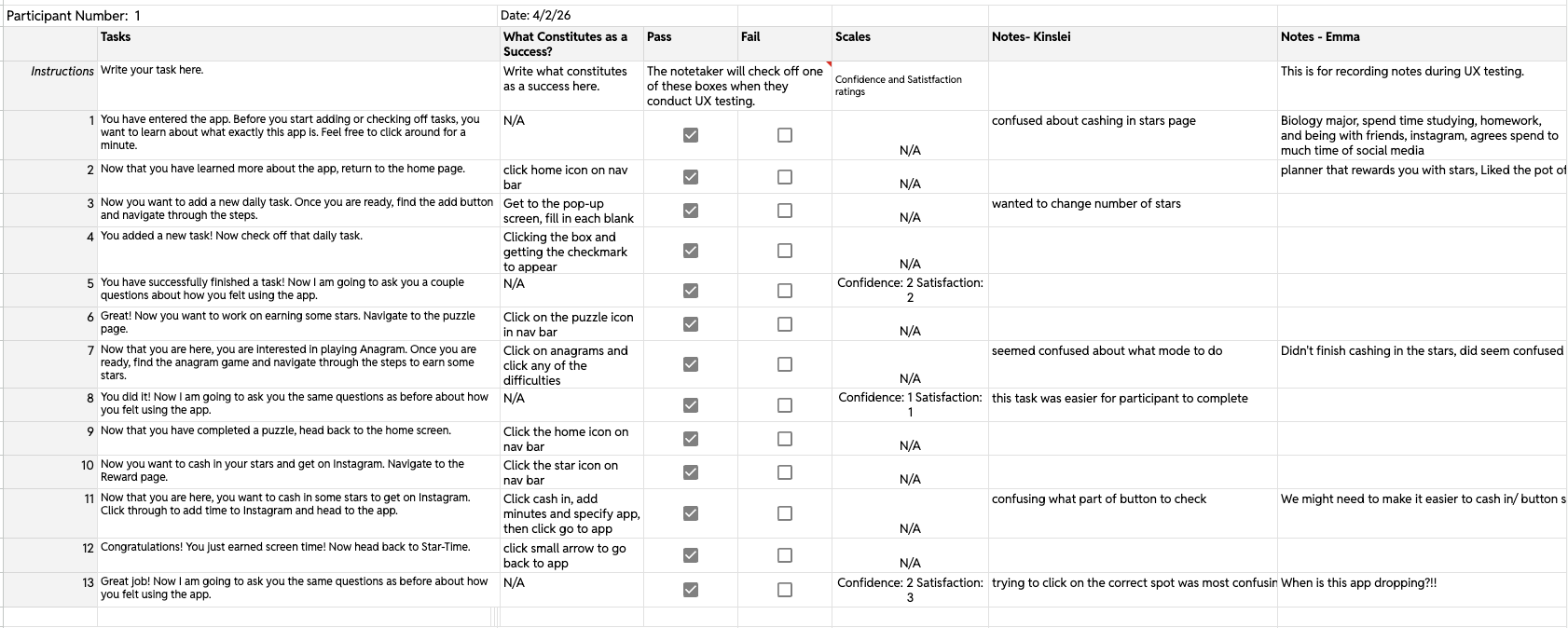
With our first prototype complete, we moved into usability testing. We tested 5 participants ages 18-35. Each participant completed a task based testing evaluated on a pass/fail basis, alongside confidence and satisfaction surveys administered at three points throughout the testing process.
Participants were people that we previously knew, but had no prior knowledge of Star Time and what the app is. This approach ensured baseline unfamiliarity with the app, while allowing for the assessment of user experience to be focused on while testing.
We asked users to complete 3 multi-part tasks: create and check off a daily task, earn screen time through a puzzle game, and cash in star rewards to access Instagram.
Below is the user testing table for our first participant. Our user testing resulted in a 98% task success rate and positive satisfaction and confidence ratings from our participants.
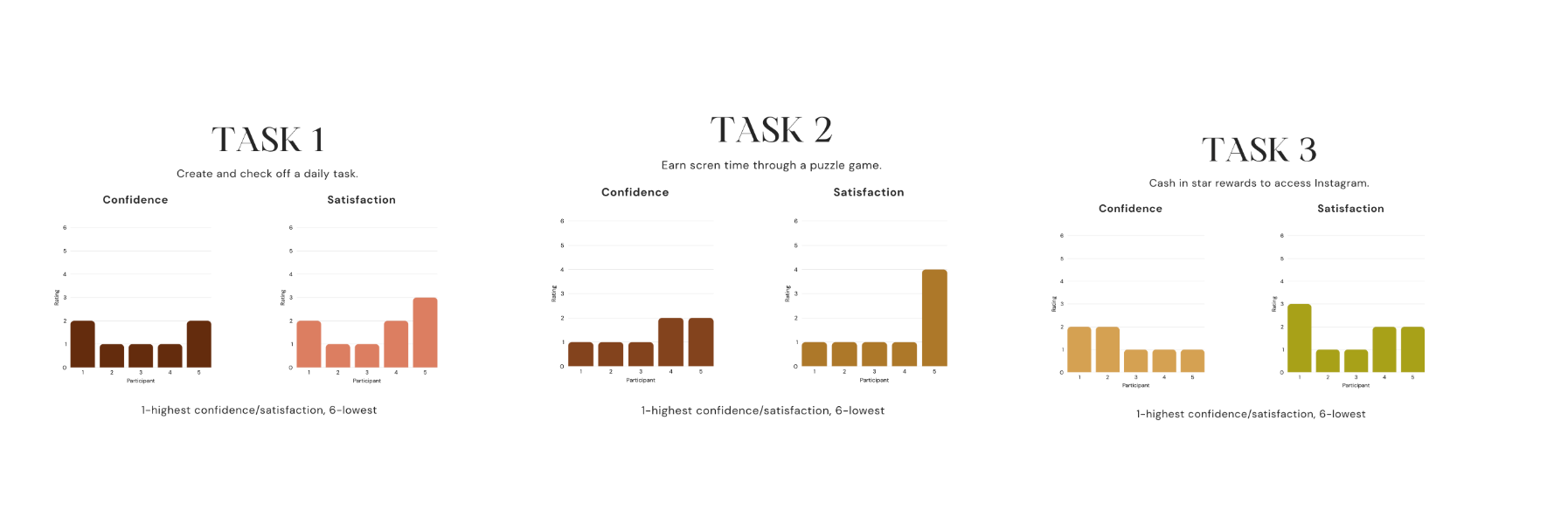
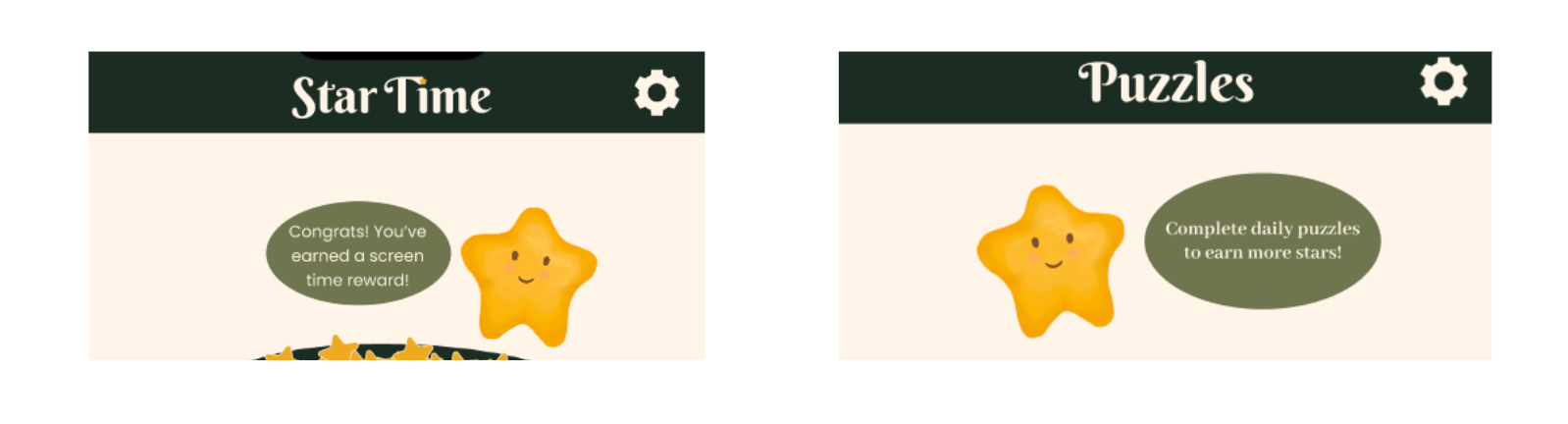
While overall results were strong, user testing also surfaced a few areas for improvement that shaped our final prototype. Specific audience feedback included slight confusion in navigation because they didn't understand what page they were on, which we solved by adding page titles to the app header.
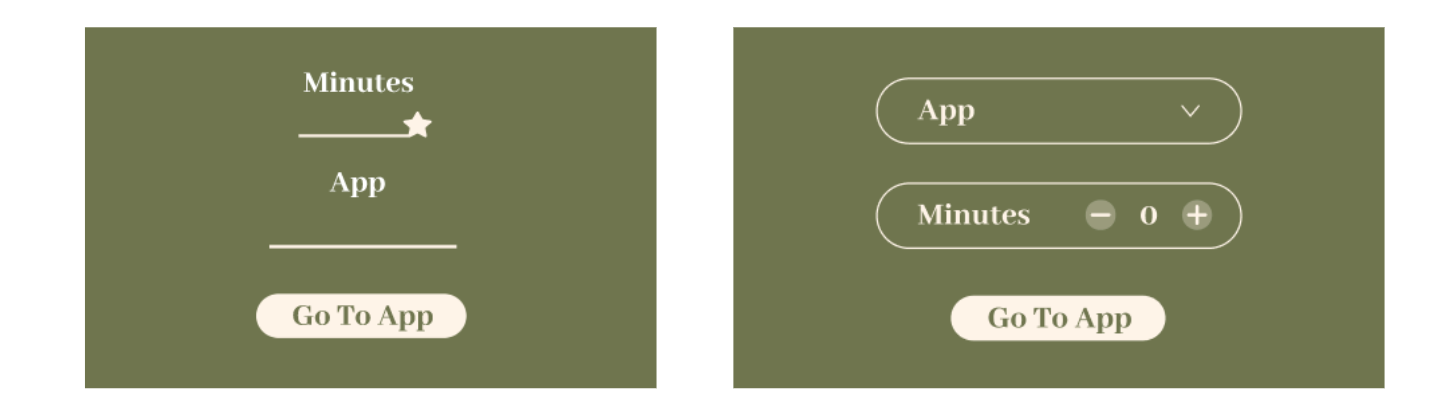
Users also had trouble selecting buttons because of the small prototyped area and were confused by the lack of typing capabilities so we included a drop down menu to make usability more intuitive.
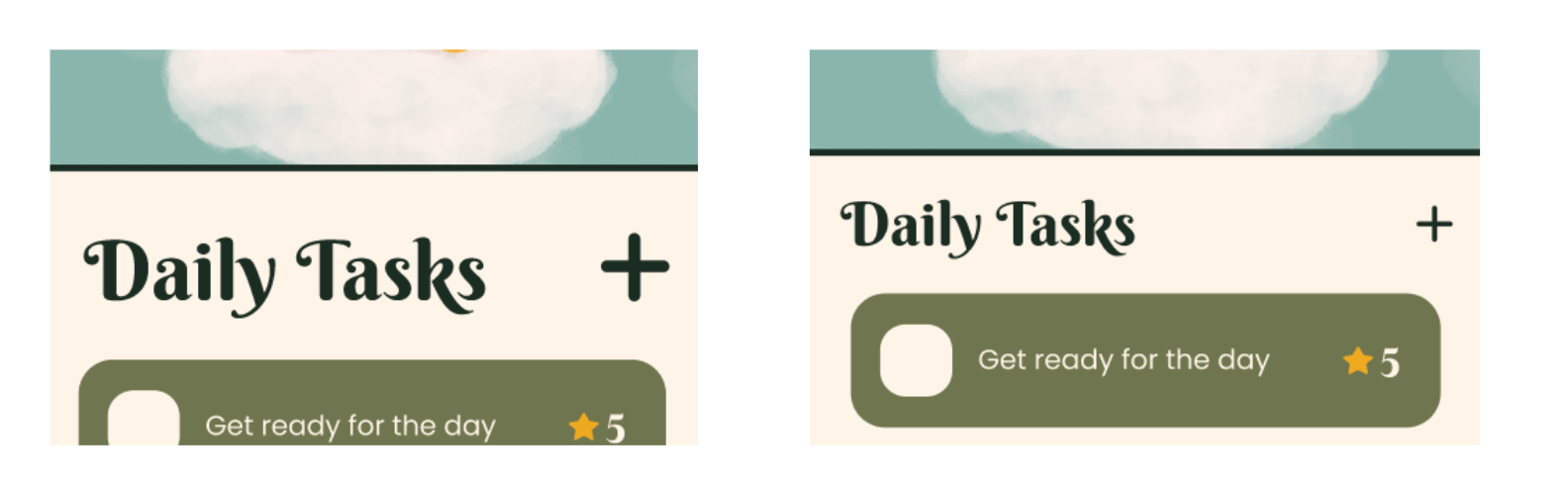
Another user commented that some elements felt too large or clunky which we fixed by creating more negative space between the UI elements.
The Result
These targeted changes, though small, made a meaningful difference in the overall user experience. The result is our final prototype, Star Time.
User testing revealed strong reception across the board. Participants responded positively to Scout the mascot, the daily task system, brain games, point system, screen time statistics, and the overall layout, noting that the app felt easy to navigate without being overwhelming or overstimulating.
This project was a lesson in consistency, as balancing multiple colors and a mascot while maintaining cohesiveness and simplicity required strategic thinking. If Star Time were to move forward, the most important next step would be developing a coded, functional version. Several elements that felt intuitive to both our team and our testers did not function as expected within the prototype, causing moments of confusion and slowdown during testing that a fully built app would eliminate.